
Projects
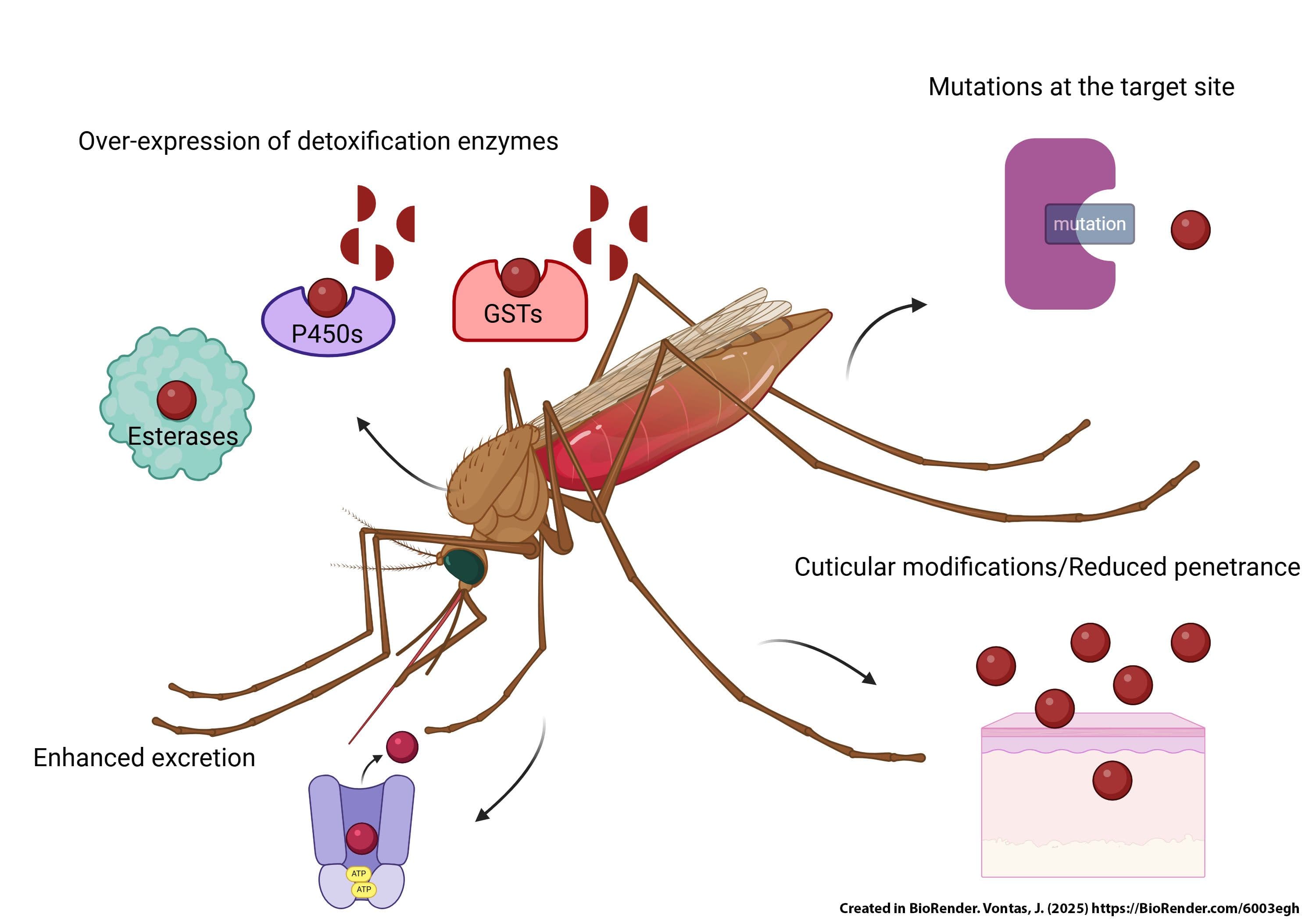
Molecular basis of insecticide resistance
Currently the most effective tool we possess for vector and pest control is the use of insecticides. However, their extensive use and our reliance on a few active ingredients have resulted in the selection of insecticide resistance.
Our lab focuses on elucidating the molecular mechanisms of insecticide resistance. We apply transcriptomic and genomic analyses, as well as a variety of approaches for in depth in vitro and in vivo functional characterization. Our aim is to better understand the phenomenon of insecticide resistance and provide the required knowledge and tools to support evidence-based decisions for insecticide resistance management.
New insecticide targets
We study insects’ physiology to identify genes that have a crucial role in their survival, development and reproduction, and could be exploited as insecticide targets. We also apply holistic biotechnology-based approaches, using state-of the-art technologies (e.g Pharma models) to elucidate insecticide pharmacokinetics. Our aim is to facilitate the development of novel insecticides, characterized by high selectivity and efficiency.
Molecular diagnostics
Leveraging our knowledge on the genetic basis of insecticide resistance, we develop highly sensitive molecular diagnostics, aiming to provide tools for the early identification of resistant alleles in field populations, enabling efficient pest control.